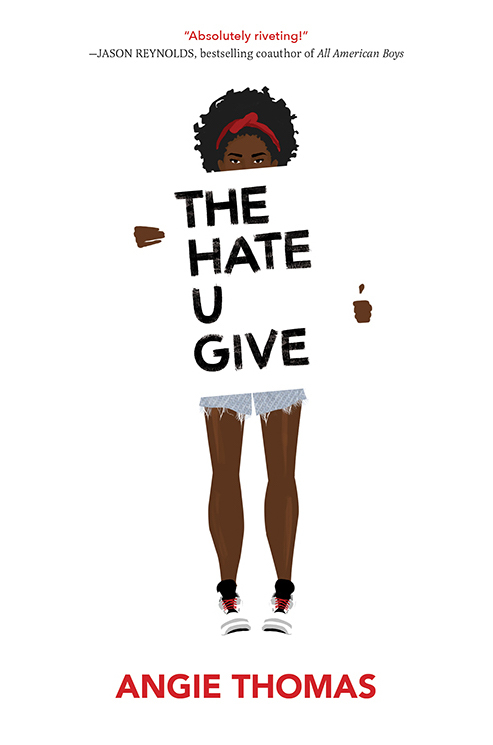
Banned Books Club: The Hate U Give

December 15, 2025

Book Title: The Hate U Give
Author: Angie Thomas
First Published: 2017

Why It's Been Challenged:

  • "Anti-police" messaging
  • Profanity and drug references
  • Depictions of violence and police brutality
  • Allegedly promotes "divisiveness"
  • "Age-inappropriate" content about racism

The Story

Sixteen-year-old Starr Carter is riding home from a party with her friend Khalil when they're pulled over by a police officer. Within minutes, Khalil, who is unarmed, is dead on the pavement, and Starr is the only witness.

Starr lives in two worlds: the poor, predominantly Black neighborhood of Garden Heights where she grew up, and the wealthy, mostly white prep school she attends across town. She's spent years learning how to code-switch and be a different version of herself when interacting with her classmates. 

But after Khalil's death, her two worlds collide. His story goes national and he's painted as a "thug," which moves Starr to face an impossible choice: speak up and risk everything or stay silent and let the narrative erase who Khalil really was.


The "Issues"

The Hate U Give has been one of the most challenged books in America since its publication, consistently appearing in the top ten of ALA's most banned books list.

Critics claim:

  • Anti-police bias: The book depicts police brutality and systemic racism in policing. But it's not "anti-police" - it's anti-police-violence. Starr's own uncle is a cop who wrestles with the same systems.
  • Profanity and drug references: Starr's community includes gang members and drug dealers. That's simply the reality in neighborhoods that have been abandoned by social services and economic opportunity. Thomas doesn't glamorize it, she contextualizes it.
  • "Divisive" content about race: Translation: the book makes readers uncomfortable by calling out racism directly. Discomfort isn't divisiveness - it's education.
  • Violence: Yes, the book opens with a police shooting. But teens are already seeing these videos on their phones. Why would we give them news footage without literature that helps them process it?

The controversy always circles back to this: the book refuses to blame Khalil for his own death. It refuses to make Starr quiet and palatable. It refuses to pretend racism is solved.

Why It Matters

This isn't just a story about one shooting. It's about what happens when teenagers have to grow up watching people who look like them die on camera. It's about when they have to choose between their authentic selves and their safety. It's about when speaking truth means becoming a target.

This is a story about:

  • Finding your voice when silence seems safer
  • How communities survive in systems designed to fail them
  • The difference between being an ally and being complicit
  • Grief, activism, and the cost of both

Thomas wrote this book in response to the real-world murders of Oscar Grant, Trayvon Martin, Tamir Rice, and countless others. She gave young readers—especially young Black readers—a mirror. She gave them permission to be angry, and then handed over a roadmap for turning pain into power.

Final Thoughts

The Hate U Give is challenged because it doesn't comfort parents who want to believe their children live in a post-racial world. It shows the truth: this is the world our kids are inheriting. They're watching the videos. They're seeing the protests. They're living the fear.

We can either give them literature that helps them understand and navigate these realities, or we can pretend those realities don't exist. One of those options prepares them to create change. The other leaves them confused, angry, and alone.

Let's not ban stories that reflect students' lived experiences. Let's read them and create the space for honest conversations about what kind of society we want to build.

Jessica

Jessica

Jessica is an Adult Services librarian at the Hermitage Branch. She fully embraces the librarian cliché by surrounding herself with books, writing, coffee, cats, and an undeniable love for cardigan weather. When she’s not recommending great reads, she’s either editing her latest novel or trying to keep up with her toddler—both of which require an impressive amount of caffeine.

Age Groups