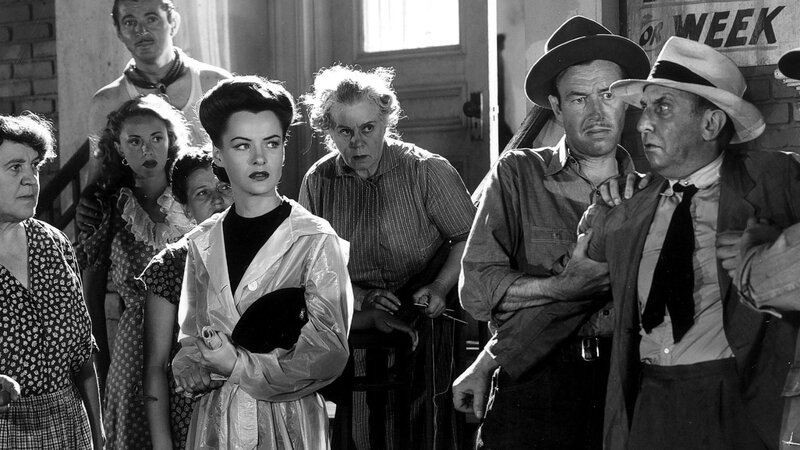



The 1940's sure had a lot of people who were "falsely accused", or who "knew too much". Seems like folks often found themselves in hot water with the law or with shadowy antagonists through almost no fault of their own. In Hollywood, at least.

The 1940's sure had a lot of people who were "falsely accused", or who "knew too much". Seems like folks often found themselves in hot water with the law or with shadowy antagonists through almost no fault of their own. In Hollywood, at least.

In Robert Siodmak's 1944 noir-mystery Phantom Lady, the unfortunate bloke is Scott Henderson (Alan Curtis), who winds up with a shaky alibi after returning home to find his wife murdered. He didn't do it, of course, and we the audience know that, but the cops aren't buying it. Thankfully, his dutiful - and smitten - secretary (Ella Raines) believes he is blameless, and takes it upon herself to track down the random stranger he was innocently passing the time with at a stage show when the murder took place. Thanks to a total lack of detail outside of an outrageous hat, it becomes exceedingly difficult to find the nameless (or, phantom) woman.
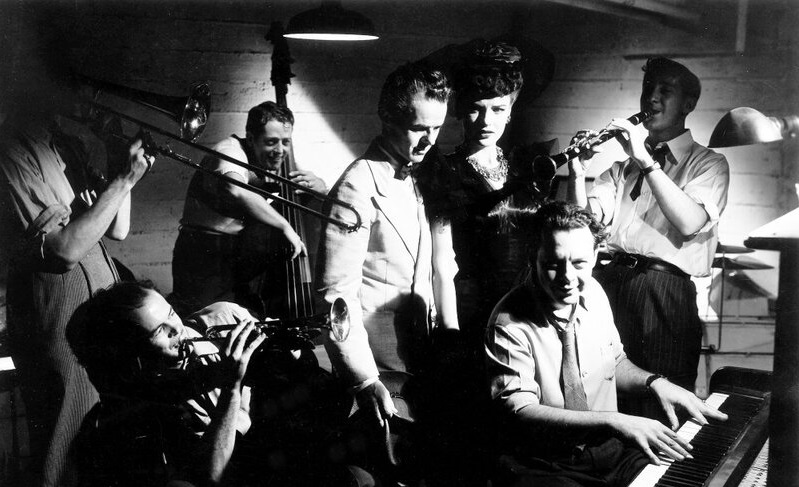
Co-starring Franchot Tone, Fay Helm, Thomas Gomez, and the always-twitchy Elisha Cook Jr., this moody and stylish noir boasts some beautiful black-and-white photography, interesting themes, and one particularly unnerving scene in a claustrophobic basement jazz club. If you like your midcentury mysteries peppered with unstable characters and plenty of dark urban spaces, you should check out Phantom Lady. Who knew a swanky chapeau could end up generating this much dramatic suspense?