


Part III
Our first blog of the new year means we’re starting off right—have you got some tunes in the background? Maybe it’s the Grand Ole Opry. Maybe not—and that’s okay. Are you sitting somewhere cozy, maybe with a cup of coffee or tea? Great—let’s go.
If you haven’t read Parts I and II of this series on the Grand Ole Opry, I highly recommend starting there first. This post might be a tad confusing otherwise (or not—maybe you’re already a Grand Ole Opry history nerd). Here, we pick up where we left off: the Opry gained its official moniker in 1927 and became one of the clear channel stations granted 50,000 watts.
I’d love to wrap up the history in this post, but there’s just sooo much to tell! Instead, we’ll cover the highlights of the Opry and WSM throughout the 1930s and early 1940s, finishing at the beginning of World War II.
The Tallest Radio Tower in North America
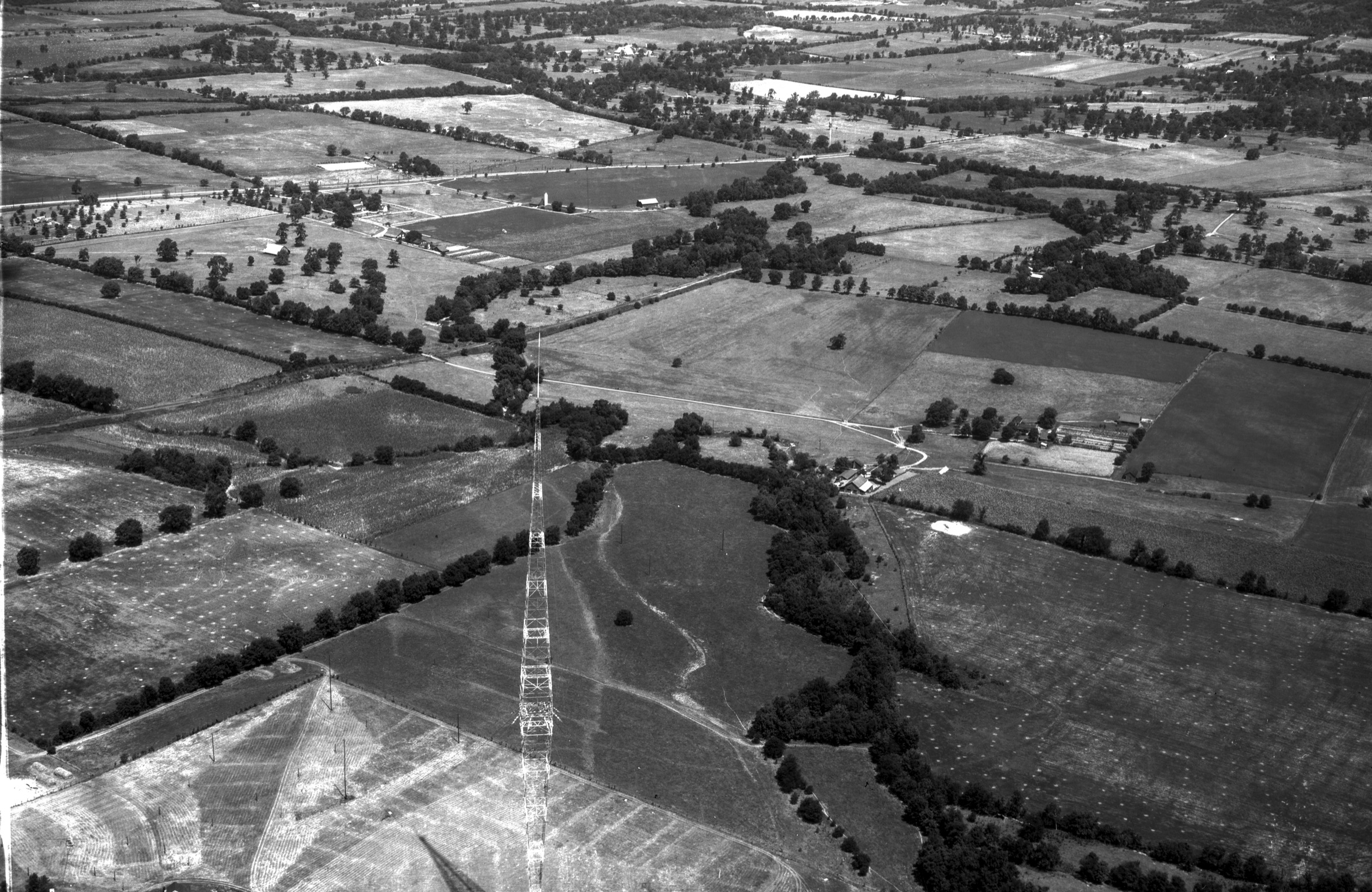
If you've driven down I-65 S near Concord Rd, you're familiar with that giant radio tower that reaches high into the sky. Well here's a brief story of how that came to exist.
It was October 1931 in Washington, D.C., where testimony was being heard to determine which stations would be granted 50,000 watts—“superpower” or clear-channel status. Louis G. Caldwell, serving as counsel for WSM, presented a compelling case that ultimately persuaded the Federal Radio Commission. Jack DeWitt also contributed, emphasizing that their audience consisted of listeners in small towns and on farms—communities that depended on the station’s reach.
Caldwell's argument consisted of the following, starting with...
"Mr. Chairman and gentlemen of the Commission, I want to take you now from the seductive climate of Charlotte and the educational walls of Birmingham and the oil of Tulsa to the quiet, historical splendor of Nashville."
Among his key arguments were:
- Lower frequency, longer-wavelength stations like WSM had longer range and should be given preferred treatment.
- WSM had the most advantageous location - dead center of the eastern U.S.
- WSM should be given the nod because it was a locally-owned station with an open-ended arrangement with NBC, while Charlotte's WBT was a property of CBS.
- WSM is as "free as any station to change its connections, or abandon any of them entirely tomorrow...which is likely to best serve the interest of the community, a corporation which is owned and controlled by local people, or one which is owned and controlled by a distant organization?"
Jack DeWitt also added that 50,000 watts would more than double its local footprint to 65 miles in all directions and bring in about 400,000 additional local listeners.
Despite some trepidation that the station was owned by an insurance company (and questioned whether that said company was advertised on the station), Caldwell clarified that it was not and WSM was granted their 50,000 watts.
At the time of this testimony, DeWitt was not in Nashville—but that soon changed. He received an offer to return home and work for WSM. After careful consideration, he left his position at Bell Telephone Laboratories and came back to Nashville to become WSM’s Chief Engineer.
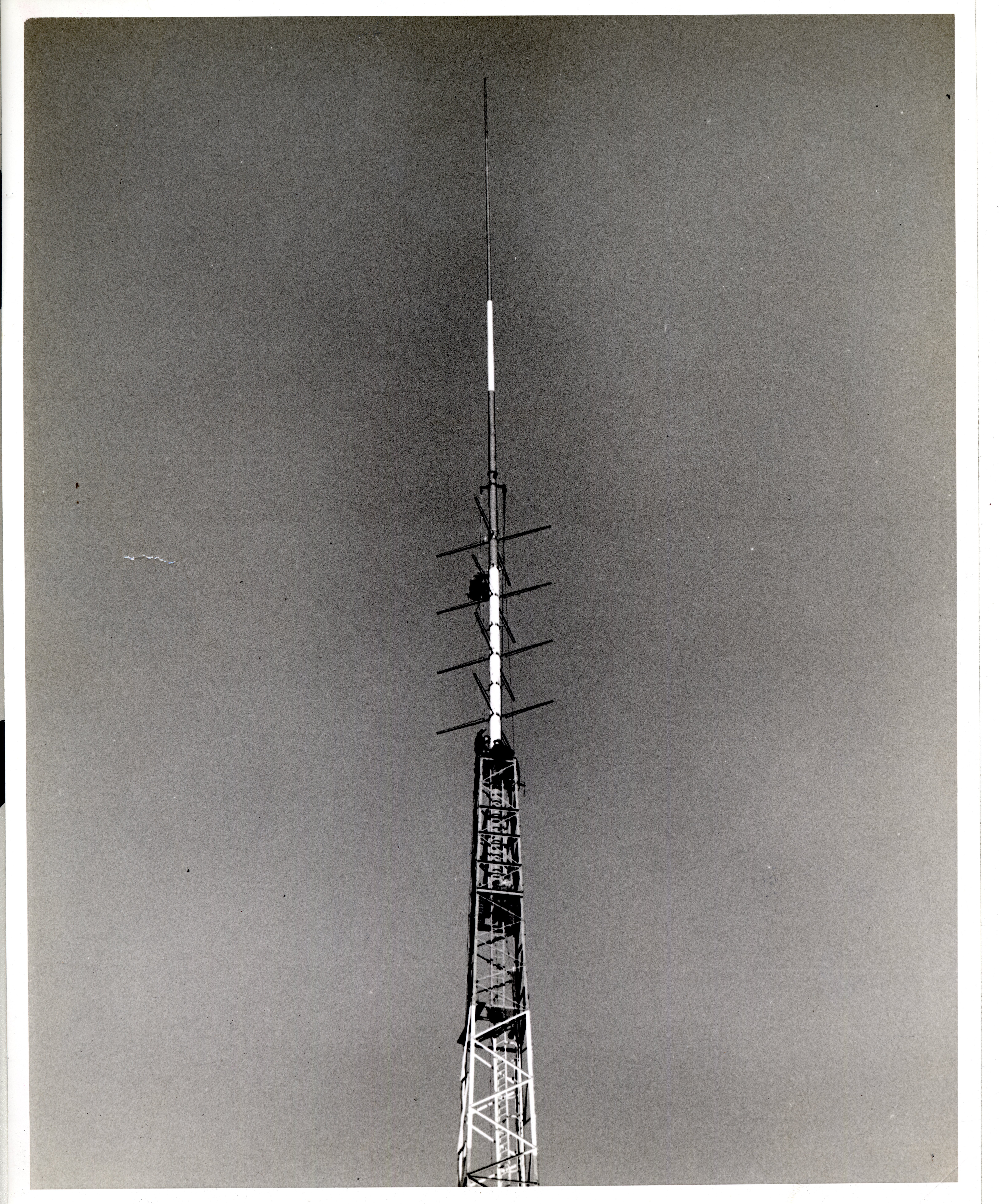
He arrived in time to oversee the installation of the new transmitter and tower. The tower was his vision—proposed as an "engineering feat and an electrical marvel".
According to Havighurst's book (Air Castle of the South - WSM and the Making of Music City)...

"It was to be a tapered diamond of steel standing nearly nine-hundred feet tall, weighing 300,000 lbs, and sitting on a base about the size of a dinner plate, held upright by eight guy wires. It would be the tallest structure ever built in TN, the tallest radio tower in North America, and a striking symbol for National Life."
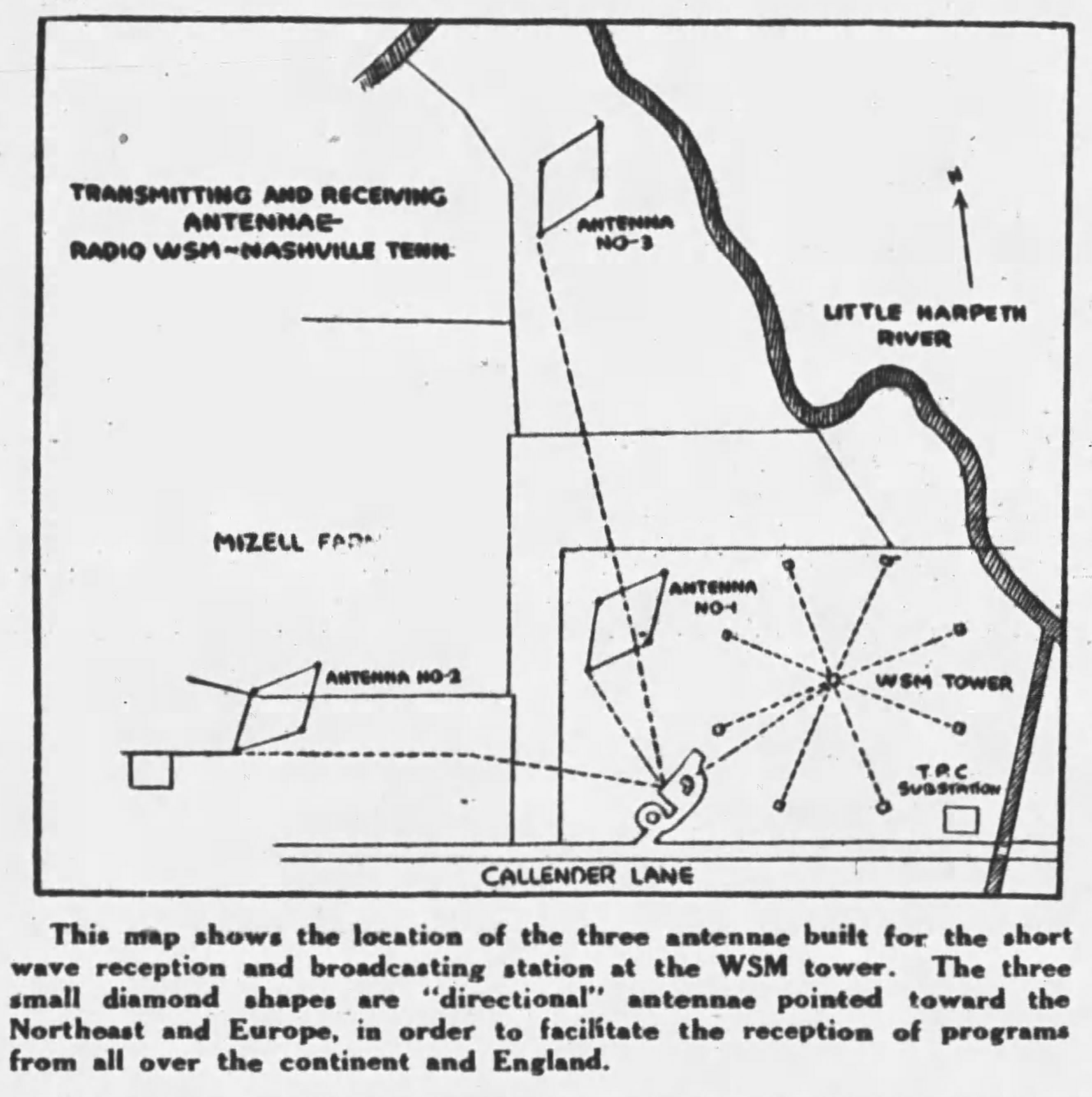
The tower is still iconic to Nashville geography, but especially when it was built - it became the icon of WSM and in the case of one music star (Alton Delmore) - it was more exciting than auditioning for the Grand Ole Opry...
"...There it was, blinking and flashing its facility out to some little person or persons, who thought they deserved the plaudits of the great Grand Ole Opry audience...It is a strange thing for me to say, but the manager of the station and the others there who heard our audition didn't add up to anything like the challenge that tall tower did."
Curious about one more tidbit regarding the tower, check it out below...
- Dedication Day for WSM's New 50,000-Watt Transmitter and Tower
While November 12th, 1932, was originally meant to be the dedication day, the newly-elected President Hoover threw a kink in WSM's plans. An address by the president interrupted the planned broadcast, so instead, on November 19th - the celebration occurred.
They offered a variety show from 10-11:15 p.m. over roughly 40 stations. Other performances included musical tributes from other NBC stations in New York, Cleveland, Chicago, and San Francisco. Francis Craig broadcasted from Denver. And Edwin Craig offered a heartfelt dedicatory address as he presented "the new WSM":
"As we join the ranks of America's radio giants, we realize not only our increased opportunities, but also our heavily increased obligation to the public service."