Cousins, Not Twins: Metro Archives and Special Collections Explained
April 25, 2026
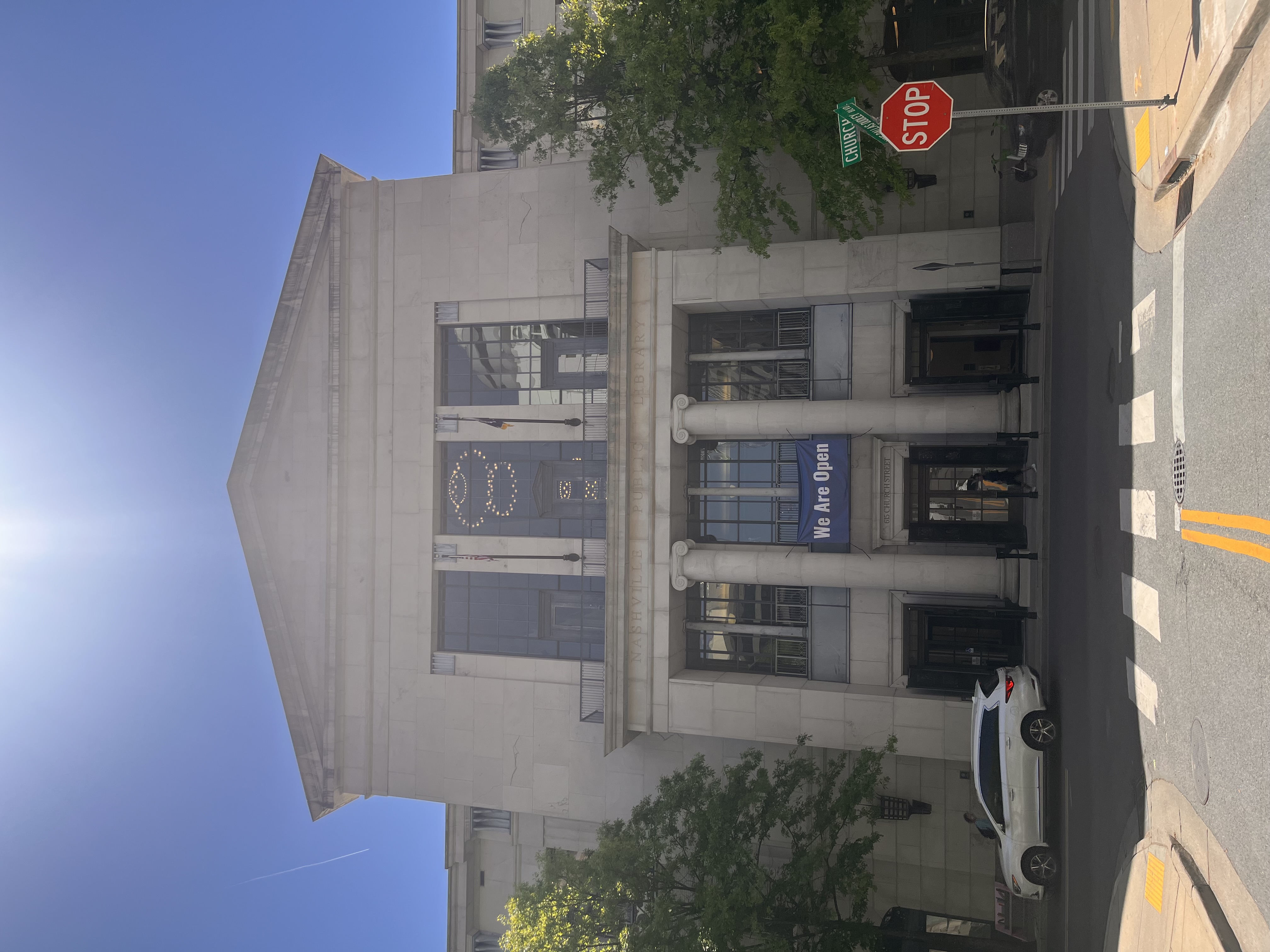
The Main Library is open again! Come visit us!
ICYMI: The Main Library is open again!
For nearly a month now, the Main Downtown Library has been back open and happy to see our patrons again—just in time to celebrate the building’s 25th anniversary (June 9th) too.
This library is unique in many ways, from its striking architecture and extensive artwork to its role as the home of Wishing Chair Productions (yes, the puppet shows!) It also houses two departments you won’t find at any branch: Metro Nashville Archives and Special Collections. While both are dedicated to preserving Nashville’s history, they do so in distinct ways.
You may already be familiar with these departments—or this may be your first introduction. Either way, this post will guide you through who we are and how we serve patrons, with a closer look at each department individually.
Who Dis, Library Edition
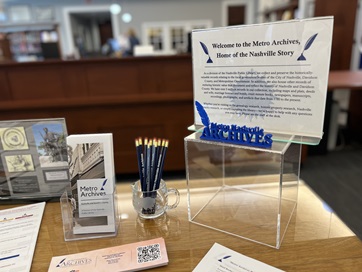
Metro Archives
The Metropolitan Government Archives of Nashville and Davidson County (Metro Archives) is a division of the Nashville Public Library. Established as the official repository for Metro Government records, our mission is to preserve, protect, promote, and provide access to the governmental and historical records held in trust for the citizens of Metropolitan Nashville and Davidson County.
In short, as we like to say on our tours—we’re the home of the Nashville story. While that narrative is largely shaped by those who built and formed the city into what it is today, that’s not all we have to offer our patrons.
The majority of the materials in our care are government records, but our collections also include non-government materials that were at risk of loss or deterioration and hold lasting historical value. To name a few of these gems:
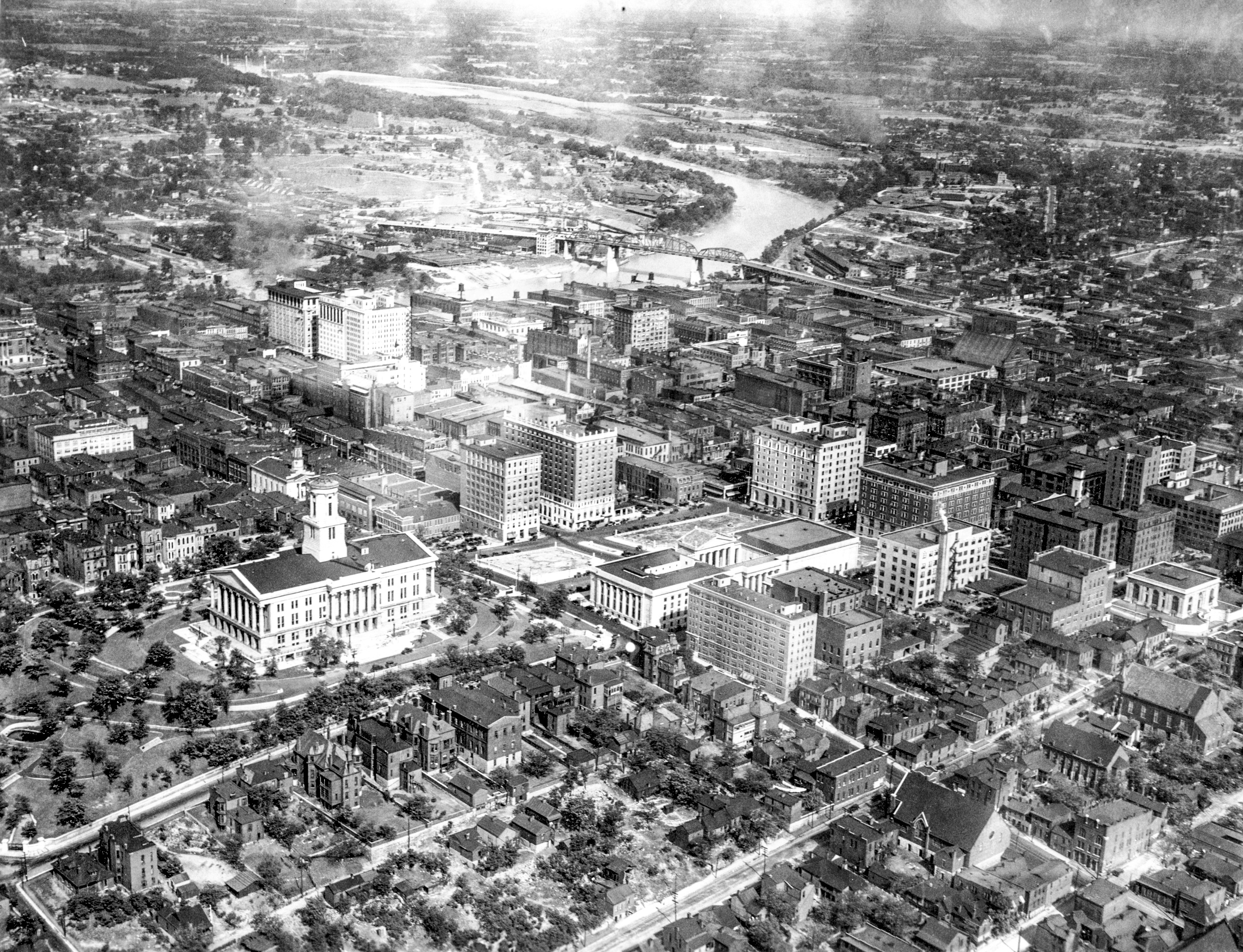
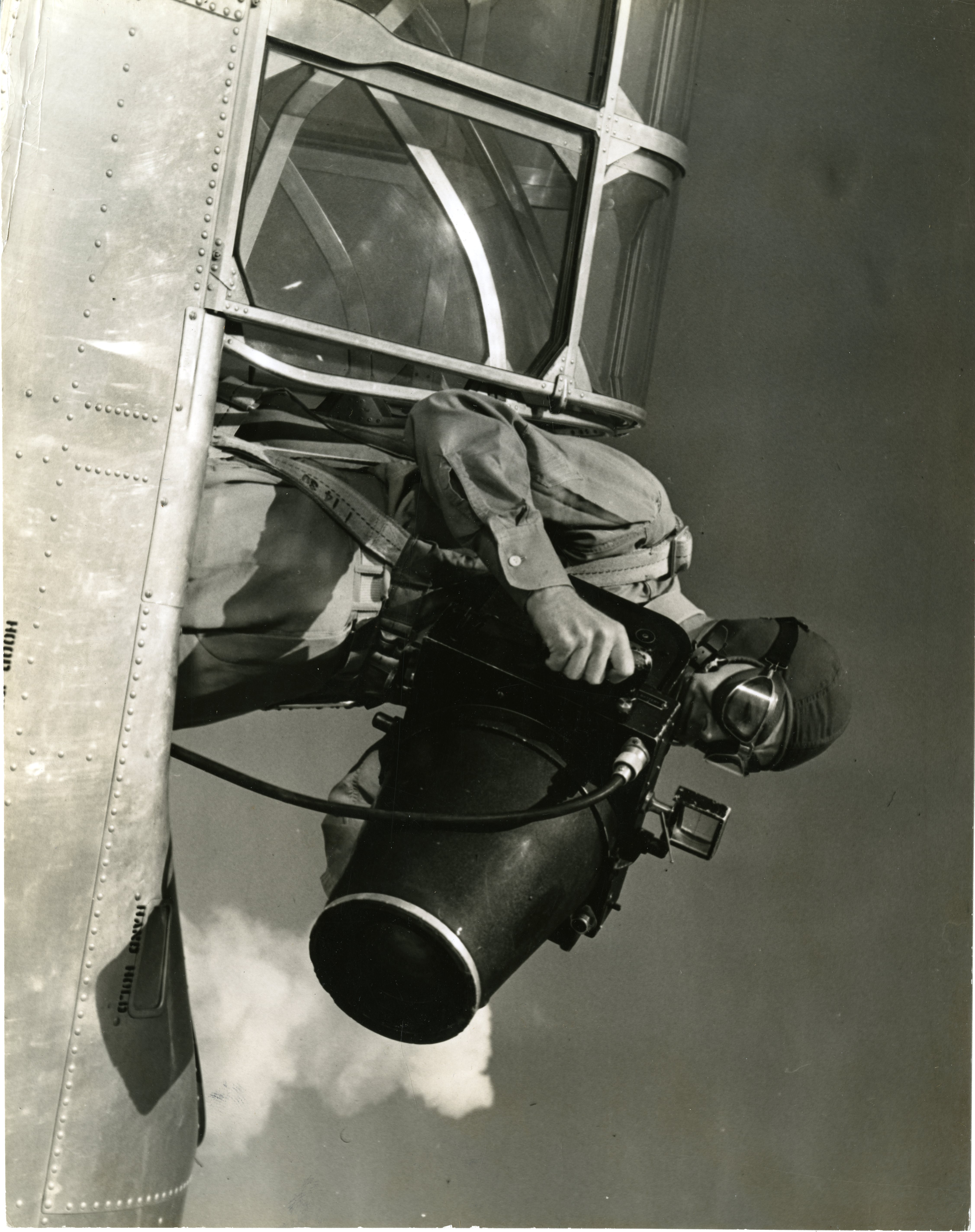
The Walter Williams Aerial Collection, featuring aerial photographs of Nashville and surrounding areas from approximately the 1930s
A view of downtown Nashville from approximately the 1930s
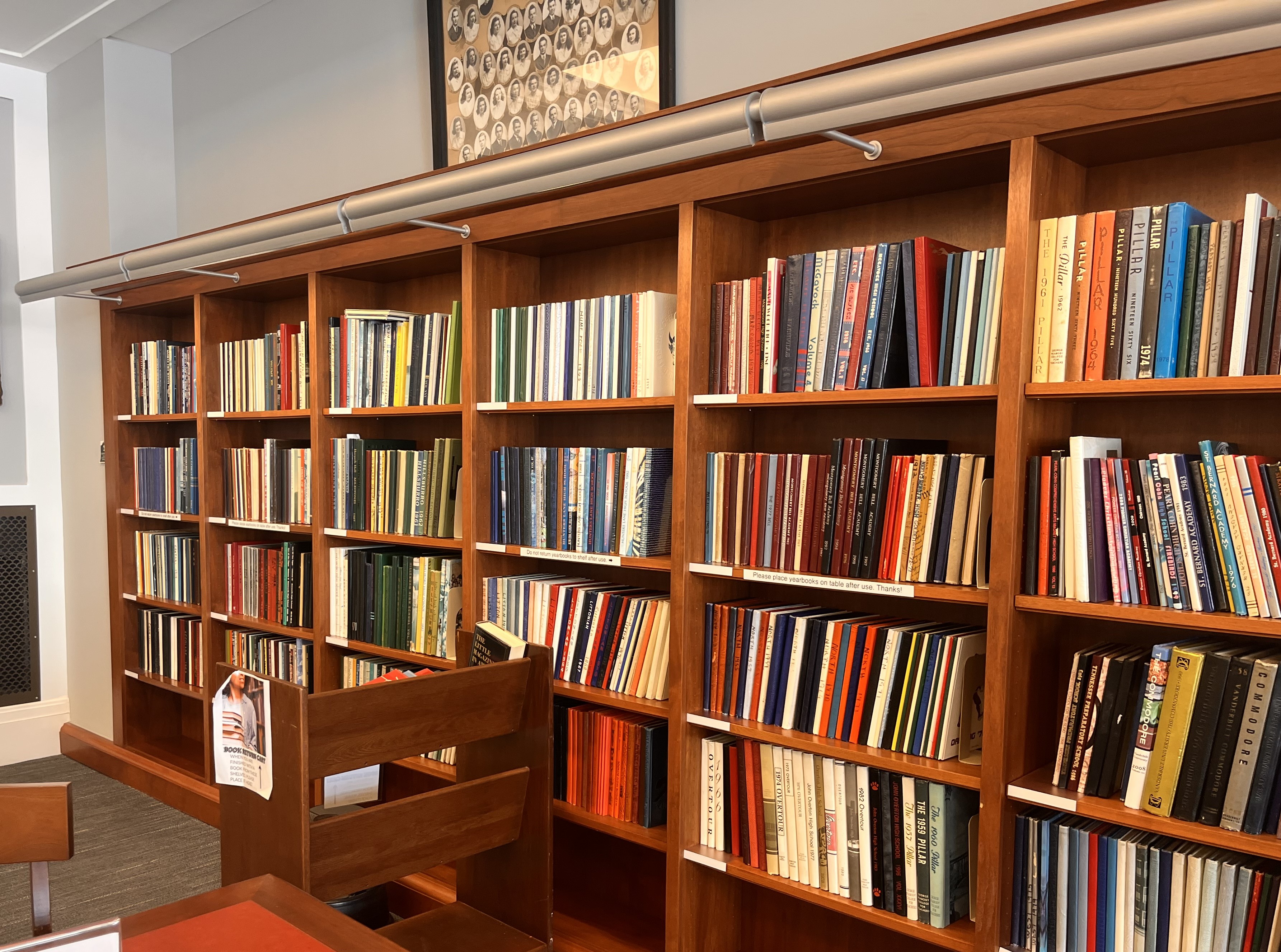
The Yearbook Collection, which includes yearbooks from both public and private schools across Davidson County (an index is available on the website). There is not an RDA for yearbooks which means to say that the Archives does not actively receive yearbooks from every school in Metro. It is a collection built by individual donations only and the Archives is still actively receiving books. The criteria are that it cannot duplicate one we already have and must be from a school within Davidson County.
Photo of the Yearbook Collection that's accessible in the patron reference area of Metro Archives
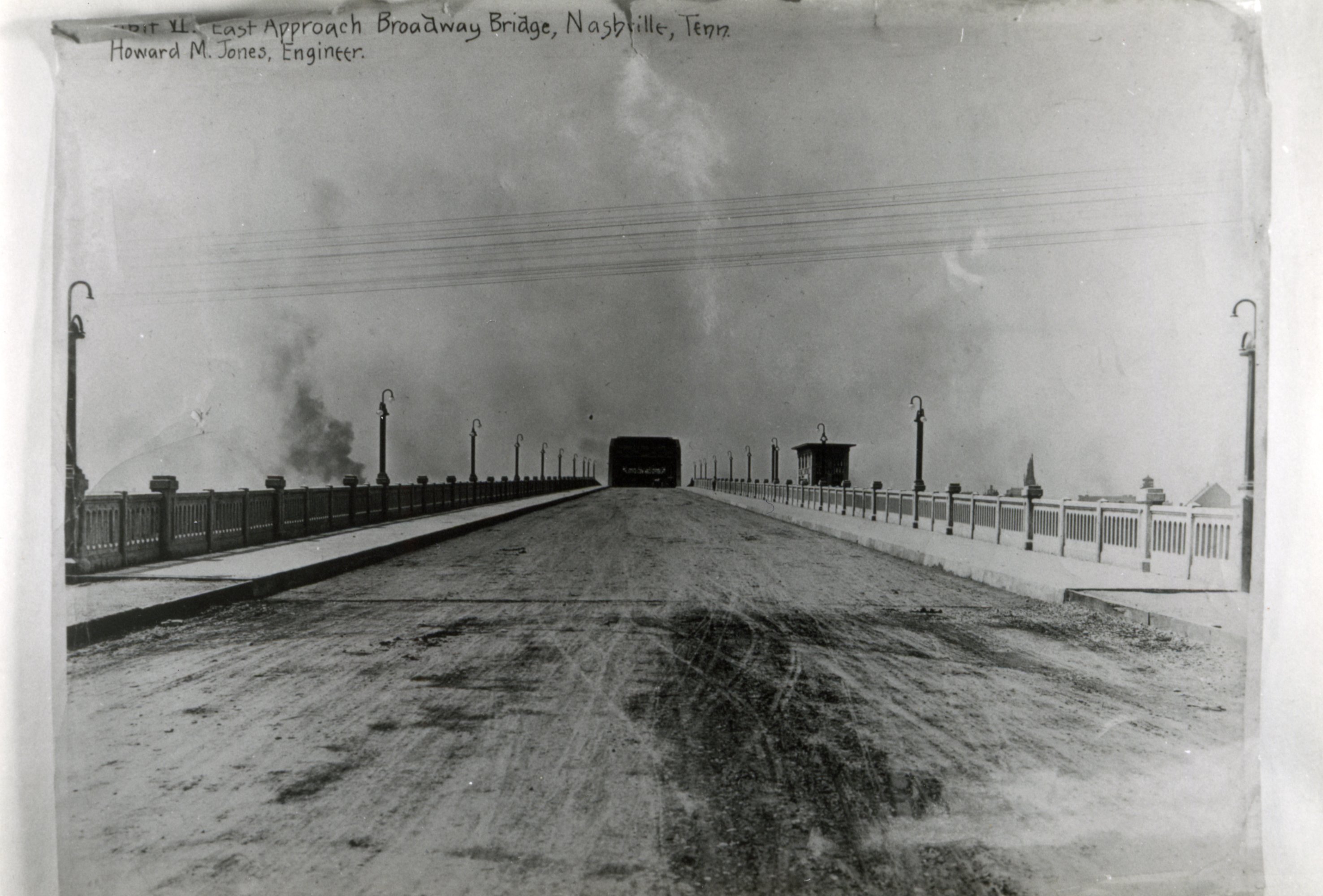
View of the Broadway Bridge under construction (currently the pedestrian bridge), circa 1908
That said, our primary mandate is the preservation of Metro government records. This is often where confusion arises about the difference between Metro Archives and Special Collections—so next, let’s take a closer look at who they are.
Special Collections
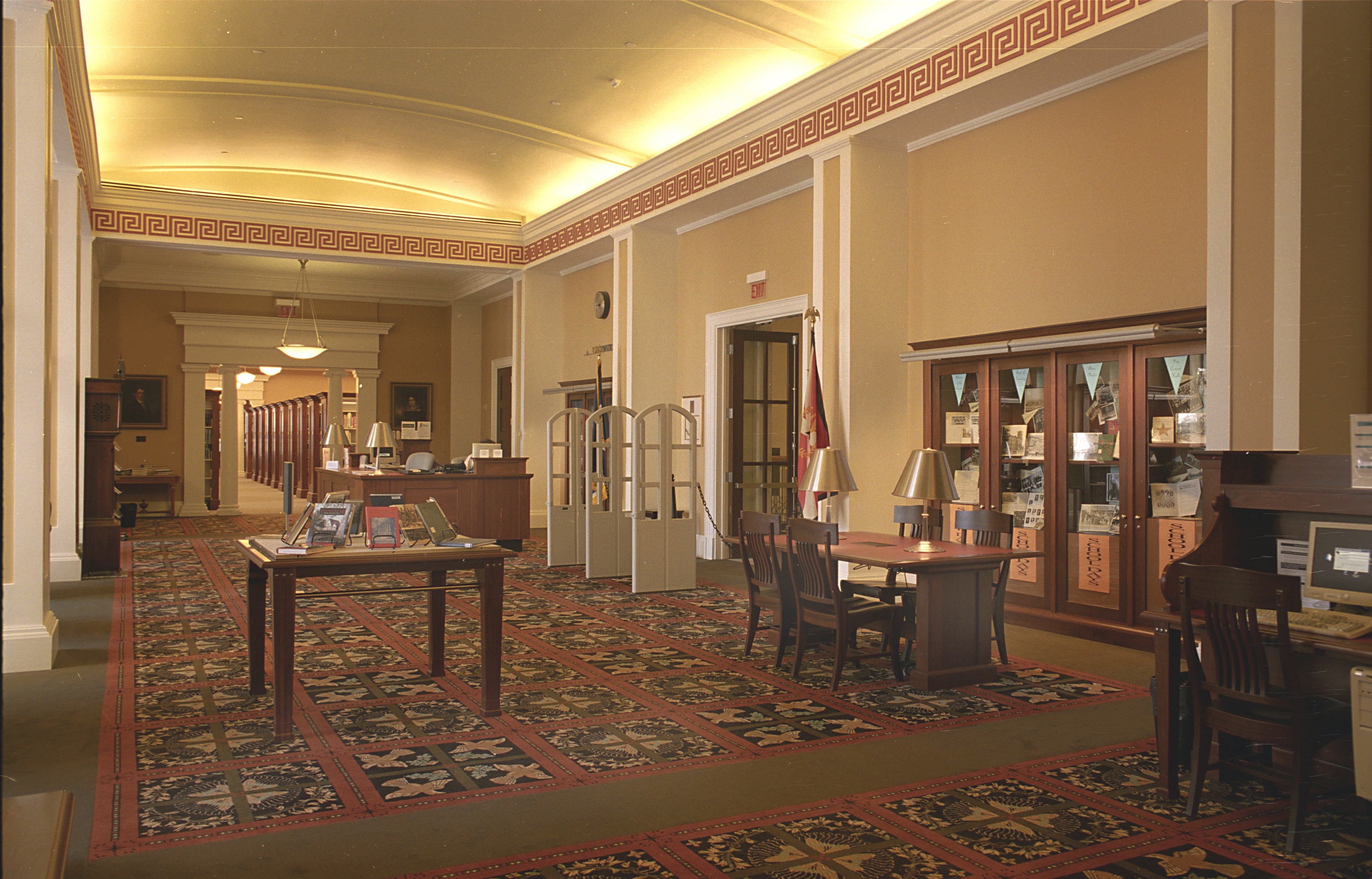
View of the entryway and staff desk in the Special Collections Division of the Nashville Public Library
The Special Collections Division of Nashville Public Library (formerly known as the Nashville Room) began with the opening of the Ben West Library in January of 1966. Its mission is to preserve and share across generations the wisdom, culture and history of Nashville, Davidson County and Middle Tennessee. The division, which includes the Nashville Room, Civil Rights Room and Votes for Women Room, serves as a repository and research center for historic and contemporary Nashville and Tennessee material.
The division has extensive book collections covering such areas as the Civil Rights Movement, Southern women’s role in the fields of politics, voting and women’s political movements, Nashville and Tennessee history, as well as genealogy materials. The collection of over 40,000 titles is open for browsing but is for reference only. Materials must be used in Special Collections and cannot be checked out.
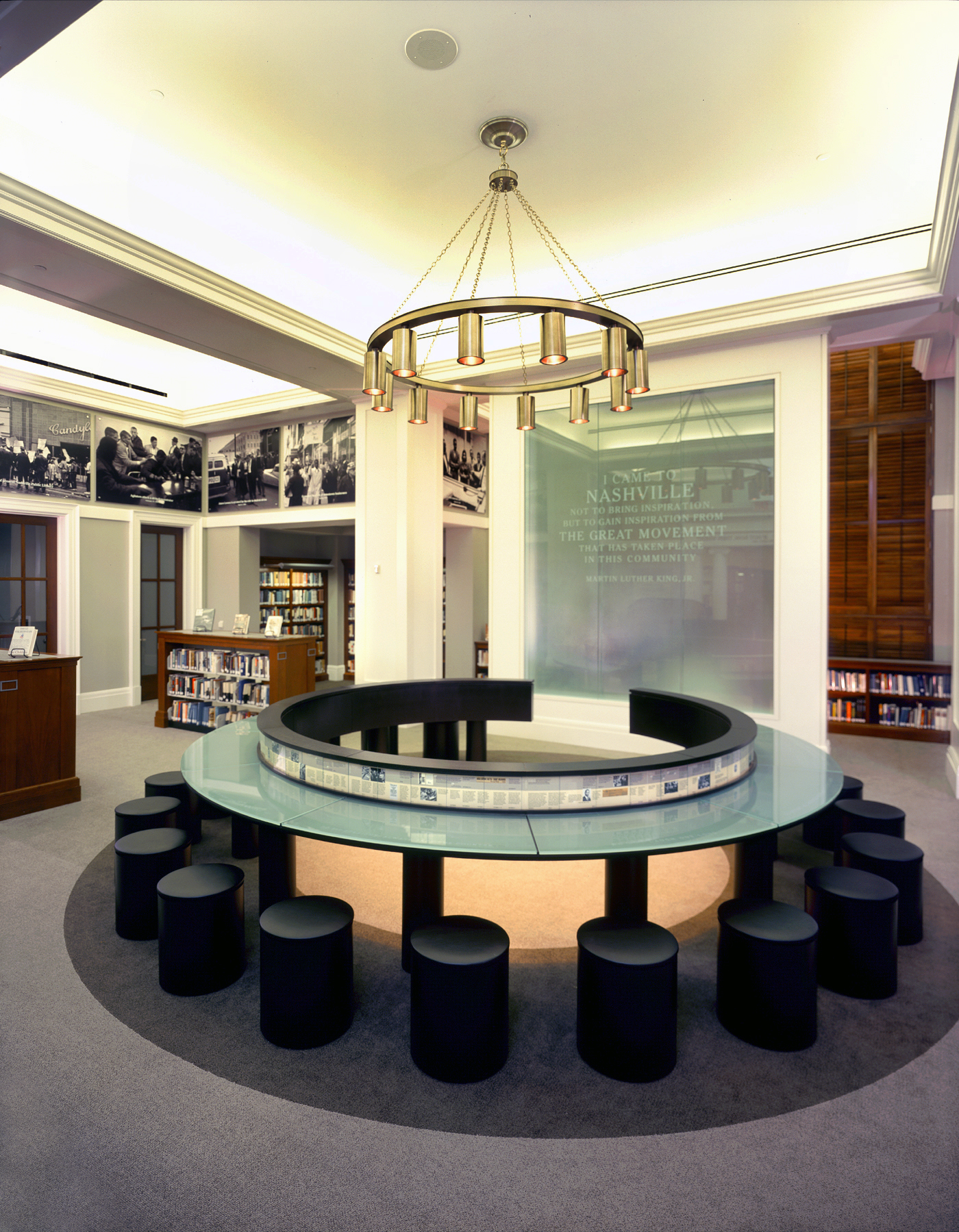
View of the Civil Rights Room in the Special Collections Division of the Nashville Public Library
In addition to published materials, Special Collections provides access to more than 400 collections of unpublished materials relating to the history and culture of Nashville and Davidson County. These include maps, postcards, photographs, manuscript collections and oral histories. Some of the most used collections include:
The Nashville Banner Archives which includes photographs, negatives, clippings files and other materials, primarily dating from the final sixty years of Nashville’s evening newspaper (publication life 1876-1998).
The Civil Rights Collection which documents Nashville’s role in the African American Civil Rights Movement through oral histories, ephemera, photographs and other materials.
The Belmont Hillsboro Neighbors, Inc. Records, a collection that documents the activities of the citizens advocacy group and includes materials about such topics as community development, zoning issues, and fair housing.
How are we the same?
So now that you’ve met us, here’s where we start to look a little similar. Starting with the obvious and already mentioned—we both preserve Nashville’s history. While the materials in our collections differ, we operate in many of the same ways: we process collections, create finding aids to help researchers navigate them, digitize materials for online access, conduct outreach in various forms, and assist patrons with their research.
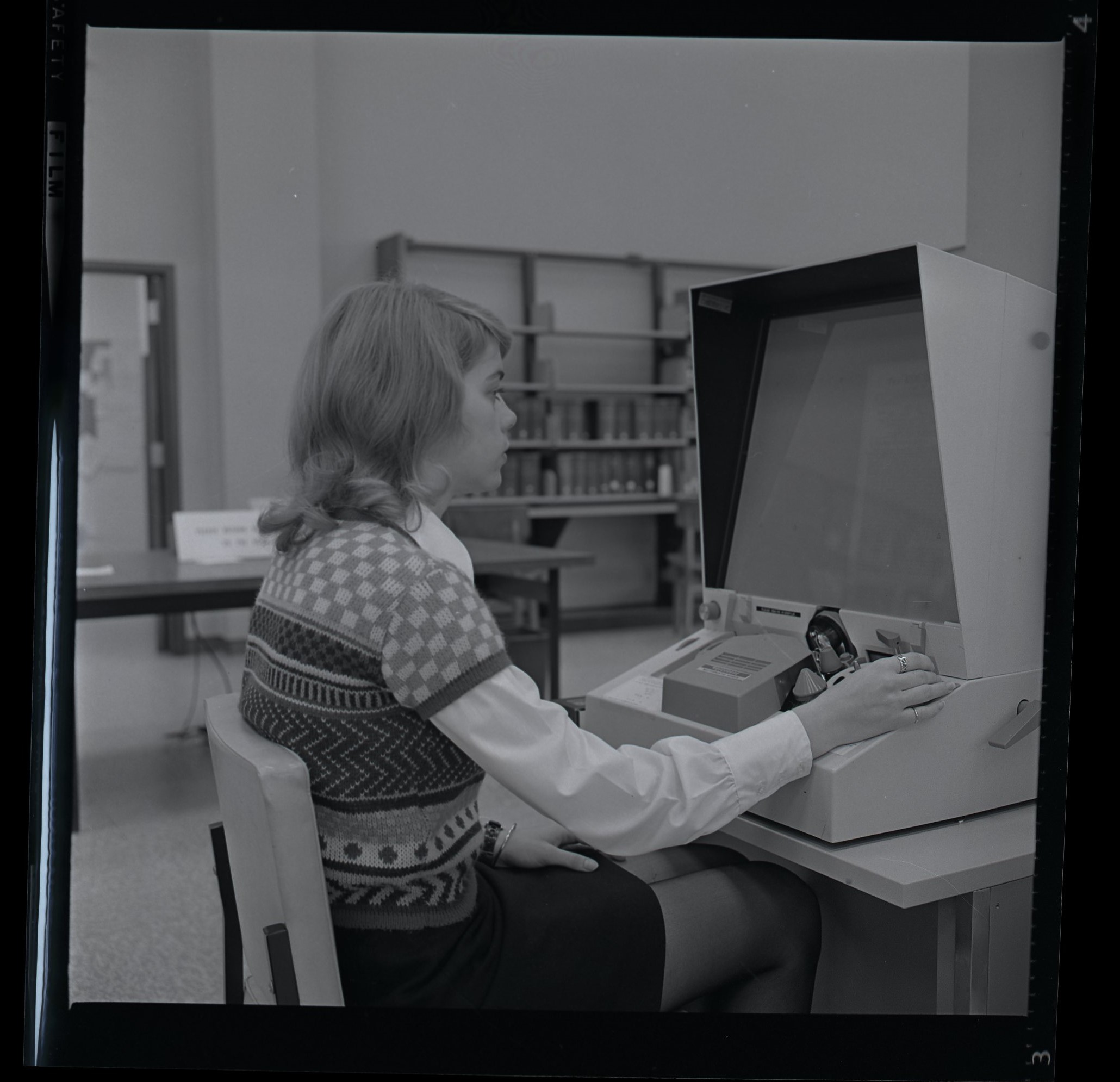
View of a patron using the microfilm machine in the library, date: 1973
The logistics of how research is conducted for each is similar as well - we're open to the public during the operating hours of the Main Library. For in-depth research such as genealogy, property research, or other types of research that may require more time than can be accommodated within a single hour - we recommend that you contact us ahead of time so that we're prepared for your visit. However, walk-ins are still very welcome!
Some of the types of research where our work overlaps include:
Genealogy
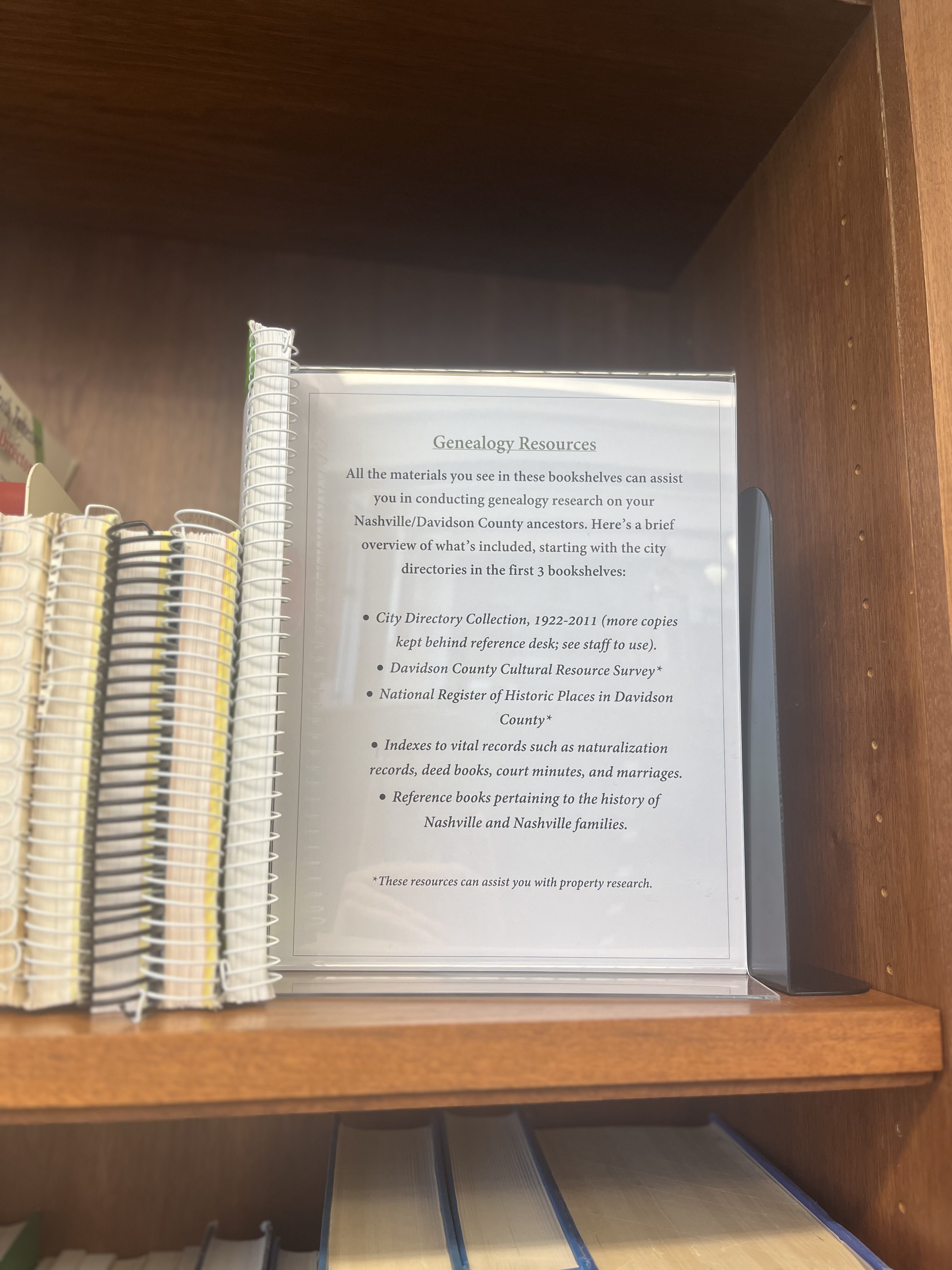
Photo of the genealogy resources housed in Metro Archives
Metro Archives: Supported by government records such as early birth and death certificates (copies of original state records), marriage records, property records, and probate records. Also includes a small vertical file collection on families, businesses, and various other topics.
Special Collections: Published materials for genealogists include family histories, county records, and local county and city histories for areas in Middle Tennessee as well as histories and records related to areas from which Tennesseans came prior to settling in the state such as the Carolinas, Virginia and Great Britain. Special Collections has extensive vertical files on individuals, businesses and other topics. The Nashville Banner Archives clippings files document many of the same subjects.
Nashville-History Research
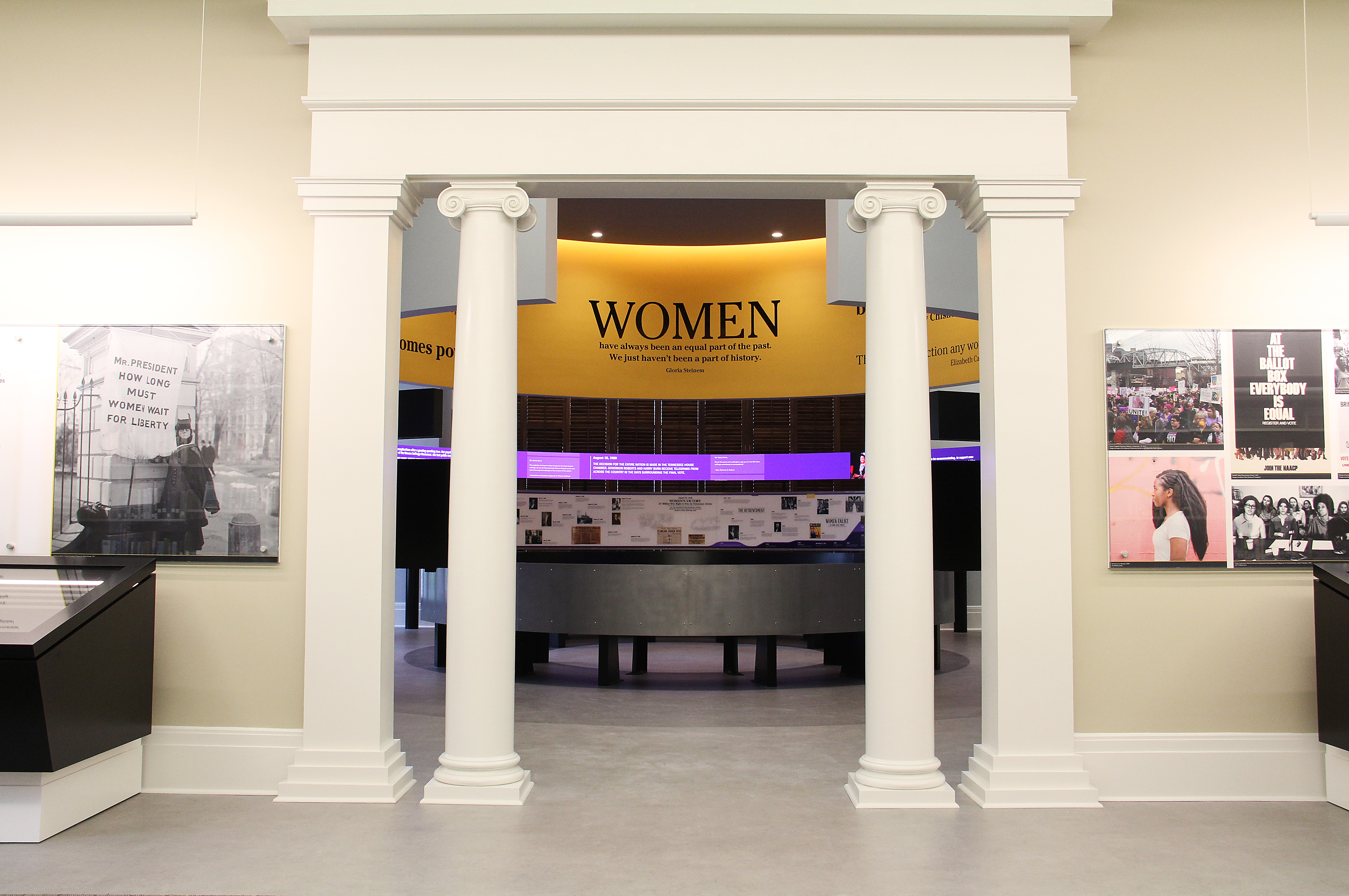
Entrance to the Votes for Women Room in Special Collections
Metro Archives: The Archives provides materials supporting a wide range of history-related topics—from transportation to sports—largely sourced from government-created records. For example, if someone is researching the creation of the Nashville Predators hockey team, the Archives holds documentation on the team’s establishment within the Mayor Bredesen Papers.
Special Collections: The division supports research with materials from Nashville families, organizations, and businesses. Areas in which Special Collections is particularly strong include performing arts, the Civil Rights Movement, architecture, World War II Military service, Women’s Social Clubs and ornithology. Special Collections holds many oral history collections covering such topics as the Civil Rights Movement, military service (including every US conflict from World War I to the Gulf War), numerous projects on Nashville history, Music Row, and the 2010 Flood.
Photograph or Audiovisual Requests
Possibly Walter Williams taking aerial photos of Nashville, circa 1930s
Metro Archives: The Archives’ visual materials are primarily government records, including those from the City/Metro Photographer, MDHA, Parks & Recreation, the Fire Department, and many others. Images sourced from these collections are in the public domain; however, publication of any materials still requires approval.
We also hold a range of valuable collections, including the aforementioned Walter Williams Aerial Collection and several unique family collections that offer a citizen’s-eye view of the city. Copyright for materials from personal or manuscript collections are not guaranteed to be in the public domain and may have further restrictions, but staff can assist with that clarification.
Special Collections: Many of the collections in the division include photographs but the largest is the Nashville Banner Archives which includes photographs and negatives from the mid-1930s through the late 1990s. The Nashville Room Historic Photograph Collection, the Warterfield Architectural Slides Collection and the NES Public Relations Records are among the most used photo collections. Unlike Metro Archives, the materials in Special Collections do not come from government sources and thus may be subject to copyright or donor restrictions.
To browse digital collections from Metro Archives and Special Collections (not all materials are available online), visit the Library’s Digital Collections page. Also, if you'd like to browse each department's individual webpage to learn more about their collections, check out the links below.
Outside of our different collection scopes, each department also has its own history. Special Collections has been around for a few decades longer than Metro Archives, which officially opened to the public at the old Mt. Zeno School in 1986. Also, in terms of governance, although we are both divisions of NPL, Special Collections reports to the Library Board, whereas Metro Archives is overseen by the Public Records Commission.
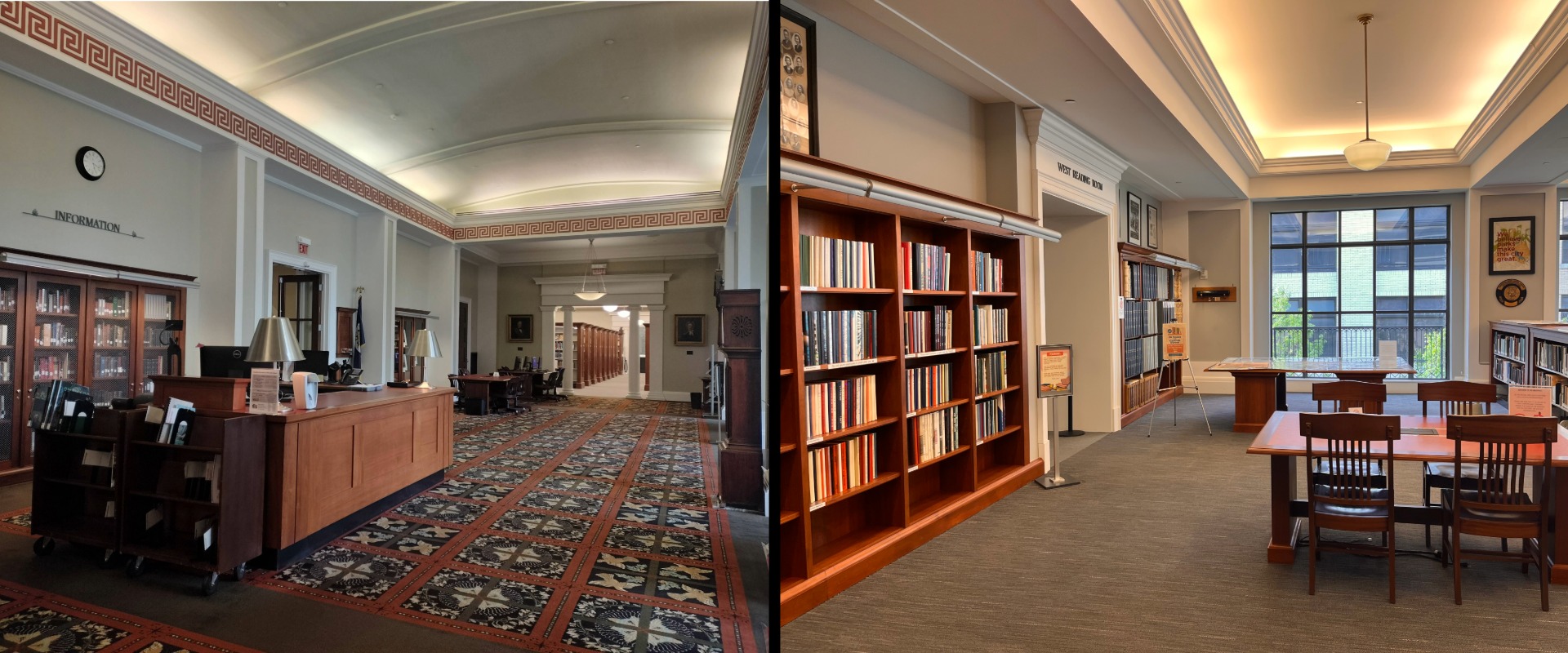
Most importantly for patrons, our spaces are tailored to the services we provide. While we always recommend visiting to see for yourself, here’s a preview of what you’ll find in each department.
Reference areas of Special Collections and Metro Archives
Our Physical Uniqueness
Our spaces may share a building, but they function quite differently. Metro Archives has called the far northwest corner of the third floor home since around 2014. However, the sheer size of the collection—more than 7 million records—means materials extend beyond the Main Library to two additional locations: the Elm Hill Pike Storage Facility and the Records Center at Metro Southeast.
Special Collections, on the other hand, has occupied the northern half of the second floor since the Main Library opened in 2001. Like Metro Archives, they also house some materials at the Elm Hill Pike Storage Facility.
The visitor spaces for both departments are well worth a trip to the Main Library on their own. If you begin with Special Collections, your visit starts on the second-floor mezzanine, which includes an art gallery space. Next, you’ll enter their welcoming space where the first thing you notice is the spectacular view of the State Capitol. Throughout the space you will find portraits of prominent Nashvillians including two of Mary Hannah Johnson, the first librarian at Nashville’s Carnegie Library. At the west end, you will find the Civil Rights Room, a place to learn about Nashville’s role in the Civil Rights Movement. On the east end is the Votes for Women Room which explores the ratification of the 19th Amendment and women’s roles in American political movements, primarily in Tennessee and the South.
After your visit there, head one floor up to Metro Archives (just past the public computer area). As you walk down the hallway, you’ll pass a display case featuring the exhibit du jour, with a map of the Cumberland Settlements (1780-96) on the opposite wall.
Once inside, it’s hard to know what will catch your eye first. It might be the ever-growing yearbook collection from Nashville schools, the tall Lebeck’s sign from a business past, or the large reference desk where staff are ready to help with your questions. You might wander into the West Reading Room, where the exhibit du jour continues—or notice the growing collection of rubber ducks at the reference desk. Whatever your historical fancy, there’s something to discover.
Let's Wrap Things Up
We are two departments that work in tandem to preserve Nashville’s history and assist patrons with their research needs—but we are not the same. Depending on your topic, we often refer researchers to one another when our own resources are exhausted. And soon, we’ll have a new way for patrons to search our records!
So, a final thought: check us both out—especially right now, in April 2026, when each department has current displays on view. And if you enjoyed this post and don't mind taking a quick poll to provide your feedback, check out the questions below!
Current Exhibits
Metro Archives: "25 Years on Church Street" (exhibit celebrating the 25th anniversary of the Main Downtown Library)
Special Collections:“Nashville Through the Viewfinder” highlighting photographs from the recently cataloged and scanned Early 20th Century Photographs Collection and “Feathers of Spring” featuring books from the Carrie Mae Weil Ornithological Collection
Sarah is a Program Coordinator with Metro Archives. Her interests and areas of expertise are history, reading books (of any kind), music, travel, Harry Potter, and bingeing a good comedy series. When not in Archives, she is either nose-deep in a book or planning her next trip. Learn more about the fascinating materials found at Metro Archives through their website.